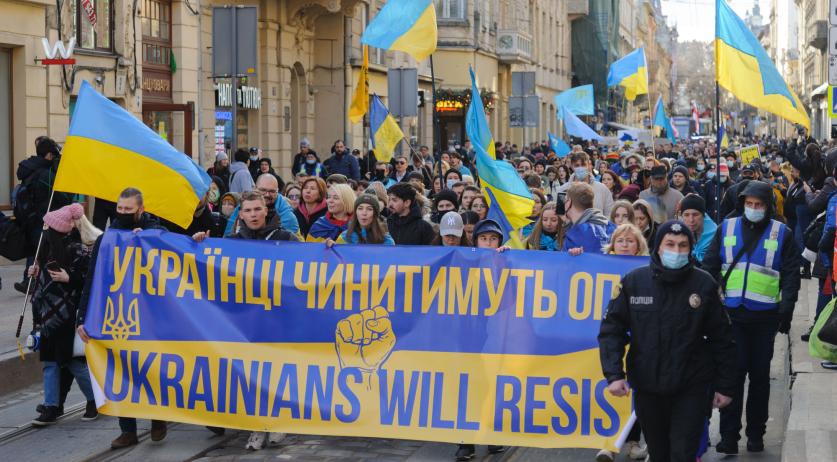
How the “Peacemakers” get the Russo-Ukrainian war wrong
Behind the stories about the President Trump’s promises of peace (read, capitulation to Russia), demands for elections, Putin’s maximalist demands for a ceasefire, and Western failures to date to deliver adequate support, there lies another story of the war in Ukraine. Almost always overlooked by reporters and politicians, and rarely if ever considered in calculations of peace, it is a story of the ordinary Ukrainian men and women who work every day behind the scenes to support their country.
It is the story of the workers who design and manufacture drones in their evenings and weekends. The students who spend their days off making dehydrated Borscht for soldiers. The old women spend their days weaving camouflage nets to keep their children and grandchildren safe from Russian drones and artillery. It is the story of the Ukrainian People’s War.
The Flawed Western Understanding of the War
Western reporting on the war in Ukraine has been dominated by three things: major offensives and battles, calls for negotiation (read surrender) from politicians and Russia’s western stooges, and reports of “war fatigue”. It focuses on the will of Russian or Western politicians, the only exception to the centering of non-Ukrainian voices being quotes from the President of Ukraine and occasionally his government officials. Polls on support for a ceasefire or negotiations are often spun to imply a desire for cessation of hostilities without any context. Watching Western reporting on Ukraine, one gets the bleak picture of a hopeless war, where the Ukrainian people are being forced to continue a horrific war they do not wish to fight by foreign and domestic politicians. That if they had a chance, they would throw out Zelensky and vote in a new president who would seek immediate peace.
This narrative is one that anyone who has spent time with Ukrainians in country will see is patently false. Yes, there are setbacks on the battlefield. Yes, there are manpower and production problems. Yes, Ukrainian people want peace. But the key difference is that Ukrainian people want a just peace. They want to live free. Free of Russian oppression, free to be Ukrainian, to speak their language, and to exercise that freedom in a democracy. To this end, ordinary Ukrainian people who have not taken up arms serve their country in myriad other ways. They have from the very first days of the war, right up till today.
The First Call to Arms

In the very first days of the war, as Russian forces swept through the East and down towards Kyiv from Belarus, hundreds of thousands of ordinary Ukrainians prepared. Men and women signed up to join the Ukrainian Army and Territorial Defence Units and hastily organised militias. The Government handed out tens of thousands of weapons to anyone who would arm themselves to fight of the invaders. Those who couldn’t fight set to work making makeshift barricades and tank barriers, or stockpiled vast supplies of Molotov Cocktails to rain hell on Russian tanks.
The fight to stop Russia’s advance into Ukraine was not one fought only by professional soldiers, but by ordinary Ukrainian civilians defending their homes. Civilians who had never even fired a gun before stood ready to fight against the “professional” Russian army, willing to die in defence of their nation and liberty.
As the frontlines solidified the militias in non-occupied Ukraine integrated into Territorial Defence Units and the Ukrainian army. Those who’s land was occupied fought on, many spinning up partisan movements.
Partisan Movements

In the temporarily occupied territories, several Ukrainian resistance movements have sprung up. These movements vary in their activities, from non-violent protest to targeted assassinations and bombings. The Yellow Ribbon Movement is one such non-violent group, who disrupt occupation activities through protest and guerilla vandalism and art. They have distributed literature explaining how best to resist integration into the Russian state and how to disrupt illegal referendums.
On the other side of the spectrum is Atesh (meaning Fire in Ukrainian Tatar). An armed resistance movement, it’s fighters have ambushed occupation convoys, poisoned occupying troops, and assassinated occupation officials and collaborators. It is one of, if not the most, active and impactful armed resistance organisations in occupied Ukraine. Atesh has been especially effective due to its coordination with Ukrainians that have been forcefully conscripted into the occupation forces. These conscripts have aided Atesh’s efforts to sabotage Russian logistics and attack Russian forces.
Numerous other organisations exist, such as the Berdiansk Partisan Army, Popular Resistance of Ukraine, and the Ї Group. These groups, made up of ordinary Ukrainians, are dedicated to the national fight for liberation. If captured, their members face torture, execution, and disappearance. Yet they continue to fight, to undermine the operations of their occupiers despite the grave risk they bare.
Cooking for Victory
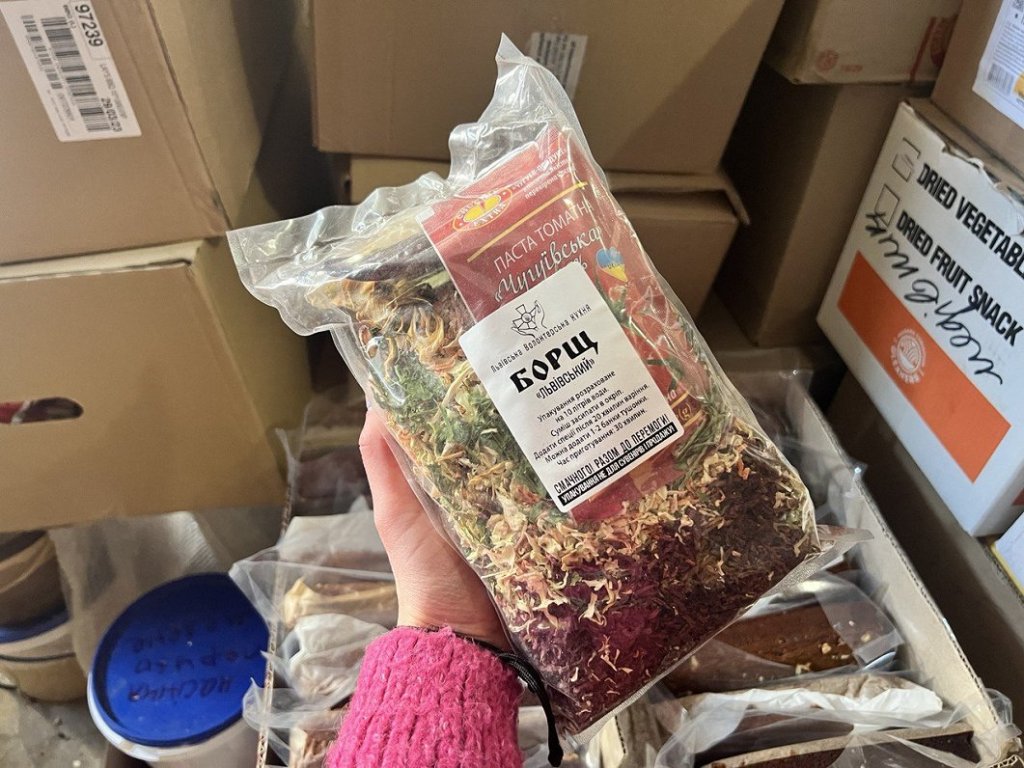
Throughout the country, civilians have set up prep kitchens to support their countrymen and women on the front lines. Lviv Volunteer Kitchen, Ant’s Kitchen in Kyiv, and Hell’s Kitchen in Kharkiv are just three examples of this. At these kitchens volunteers prepare dehydrated meal packages for the frontlines, or fresh meals for displaced civilians and locally based soldiers.
The efforts of these volunteers have been essential for keeping Ukrainian troops well fed, and motivated. Thousands of meals are prepared daily, ensuring that Ukrainian forces are kept fighting fit.
Home made drones
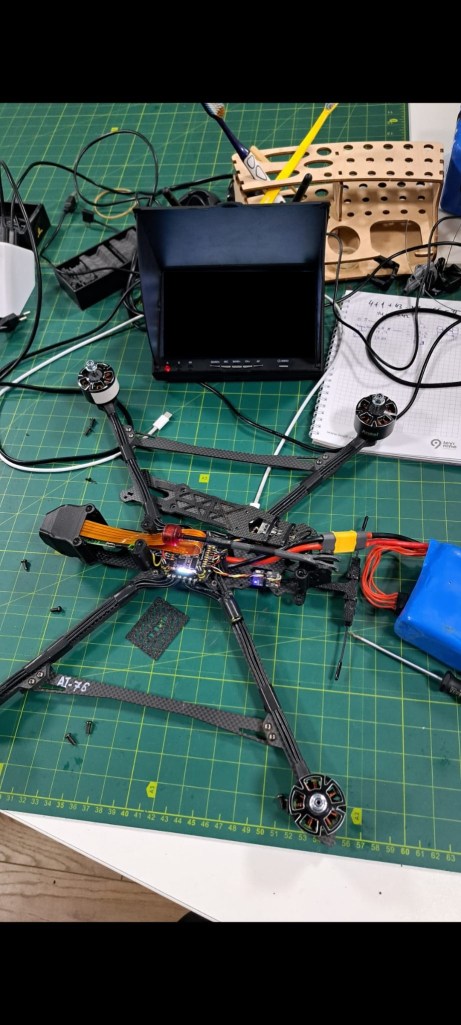
Ukraine has made excellent use of drones to blunt Russian attacks and defend their territory. What many in the West don’t realise is that huge numbers of these drones are 3d printed or assembled by civilians. In secret locations Ukrainians assemble drone frames, test them, and send them to the front. Drone parts purchased on the cheap from China are used to mass produce FPV kamikaze drones that have changed the face of the war. Online courses teach Ukrainians how to assemble, solder, and program these drones, through freely accessible videos and PDF guides.
Others use personal 3D printers to manufacture specialty or replacement parts, which are ordered centrally by army units, the orders then being fulfilled by civilian volunteers. Without these efforts, the Ukrainian army would be left even more outgunned than the West has left them.
The National Effort
Besides the volunteers who carry out specific duties or jobs to support the war effort, ordinary Ukrainians help defend their country every day. Social media is full of fund raisers to support units on the frontline. People send supplies to their friends and family who are fighting. At concerts, war paraphernalia is auctioned off to raise money. Every morning at 9am, the nation stands silent for a minute to remember those fighting and those who have fallen. The war is not an effort divorced from the population at large, it is one in which the whole people of Ukraine have an active stake.
What this means for the war and for peace
Some may wonder why this matters, you may be one of them. Why does it matter if Ukrainian people are so committed to the effort of their army, to the cause of victory? Surely the decision about an end of the war does not reside with them?
This line of logic betrays a fundamental misunderstanding of how Ukrainians see this war. For the Ukrainian people, this is a war of survival. A war that cannot be lost, for defeat is death. Even if West and Russia somehow managed to conspire to bring Ukraine’s leadership to a position of capitulating, that would not break the will of the Ukrainian people.
Their fight will continue, just with less support from the West. A ceasefire might be forced for now, but that will just be a pause till Russia resumes it’s war. Ukrainians are fighting with improvised explosives under occupation, they are 3d printing drones and bombs, they are hand making food supplies to keep their sons and daughters fighting fit. No diktat from the West will stop them from fighting now, in the future, or from staying prepared.
The question that faces the West is not, despite what its leaders may believe, should this war continue. That is not a decision that rests with them. This war, in one form or another, shall only end once Russian aggression has been blunted, its army broken, its dreams of conquest shattered. Ukrainians, and whoever shall next be the targets of this aggression should Ukraine fall, will continue to fight for their liberty and their lives until that has been achieved.
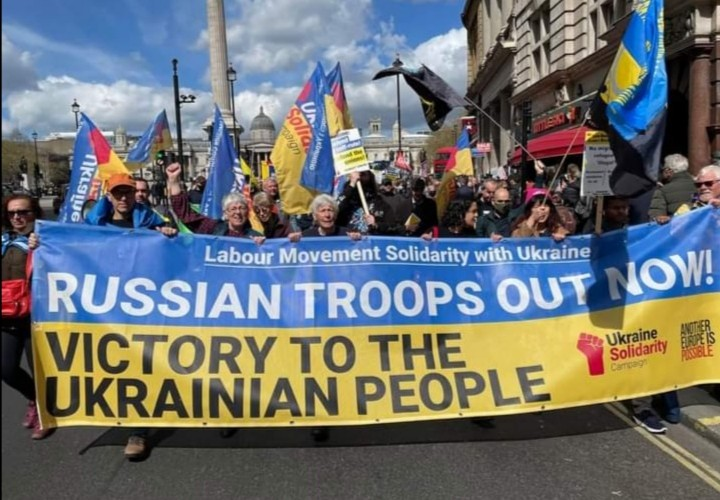
No, the question for the West and the wider world is only this: “shall we abandon the Ukrainian people to face this genocidal beast alone, or shall we stand beside them.” For the thousands of foreigners who have traveled to Ukraine to help the Ukrainians both at the front and behind it, this question need not even be asked. For the millions in the West and around the world who donate, raise awareness, and campaign, it is clear. It is far beyond time that our leaders came to the same conclusion.

 Simmonds-Upton: Scribbler
Leave a comment