How leftist pacifist positions are outdated and harmful in an age of increasing war
A spectre is haunting Europe, the spectre of full scale war.
While Ukraine has been fighting on the front lines in the war against russian barbarism for a decade now, Europe has rested with its head in the sand and refused to face the looming conflict with russia that its inaction has facilitated. 2008 in Georgia, 2014 in Crimea and the Donbas, and 2022 in the rest of Ukraine were the moments that the West had a chance to step up and break russian aggression. Every opportunity was missed, and disastrously. Now, russian warplanes violate our airspace. Drones disrupt airport operations. russian paid saboteurs kill and main across Europe. Europe’s response, even now, is awfully slow. Armies are not ready, weapons stockpiles are empty, our drone technology is woefully behind our enemy’s.
War is coming, and within the next few years. I have no faith in the West acting in time to ensure that russia will be blunted in Ukraine. This means we will most likely face a remilitarised and organised russia assaulting Europe’s Eastern flank within a decade at the outside. These next few years will be critical in ensuring this coming war will be merely terrible, not utterly catastrophic. And all the while, a 5th column of useful idiots undermines us from within.
A world of more war
I preface this section by saying that I was myself a pacifist until 2022 (a position that had been weakening since 2014), and I am myself a leftist (if my other writing had left that in doubt). That said, I like to believe I am able to shift my beliefs to fit a changing world, and I can’t continue to hold the position that hoping for peace and blind belief in diplomacy will end war as a social phenomenon. The relative (by historical standards) peace of the Pax America period is coming to an end. The small scale regional and civil wars of the past three decades are being replaced by large scale inter-state wars.
russia’s continued path of expansionism in Georgia and Ukraine, and its hybrid war throughout Europe, sets the stage for a Europe wide conflict. China is preparing for a war with Taiwan, and potentially against other South Asian neighbours over its claims in the region. The United States is poised to take unilateral and illegal military action in Venezuela, and has postured over Canada and Greenland and threatened to invade Mexico. On top of it all, Israel, aided and abetted by the West, has engaged in the most openly broadcast genocide in human history, sundering what little faith remained in the existing system of international law.
Hoping for an end to war is not naive, nor is it in any way negative. We should not crave war, we should fear and despise it. However, the inescapable conclusion from recent years is that we are approaching a time of greater conflict, not less. Wishing this shift away shall not make it so, and climate insecurity and resource scarcity will doubtless accelerate this transition to a more dangerous and fractious world.
The pacifist left
In a widely derided public interview on the 27th October, “Your Party” co-leader/co-founder/member (the organisational shambles that has been Your Party is deserving of a whole other blog post) Zarah Sultana lay out her party’s apparent foreign policy. She called for an end to NATO, an end to military support for Ukraine, and while initially condemning russia’s illegal invasion of Ukraine, also condemned the Ukrainian Government. It was an interview chock-full of stereotypical leftist weakness on Ukraine, blaming NATO for the invasion, viewing weapons to Ukrainian defenders as a problem not a lifeline against genocide, blaming Putin for the invasion to avoid criticism of russians more generally, and undermining the Ukrainian State and People’s right to defend themselves.
I take no issue with her claim that Zelensky is no friend of the Ukrainian working class (something his government’s policies have consistently shown to be the case). However, doing so only in the context of the war serves to undermine the Ukrainian cause, not ally oneself with the cause of the Ukrainian working class.
Fundamentally, it was an interview that epitomised the Western European Left’s abject failure to understand the russo-Ukrainian war. It represented a consistent failure to accept the reality that the genocide of Ukrainians is being prosecuted by russian working class soldiers who willingly take up arms for large paychecks. It fails to consider the cultural and historical origins of the conflict mired in russian chauvinism and imperial culture, reducing it to a purely materialist conflict between oligarchic regimes. And as always it ignored the fact that russia is not a state or society that accepts negotiation with those it considers lesser, and therefore diplomacy can only come from a position of strength. Hamstringing Ukraine’s ability to resist the genocide, as the left consistently calls for, will destroy any chance of negotiation.
The pacifist Western left, in all ways, is predominantly focused on ideological purity over pragmatic action. We cannot align with the Ukrainian government, because they are liberals not socialists. We cannot support the sending of vital military aid, because evil capitalist arms-dealers will profit. We cannot support the Ukrainian people in their war against genocidal invaders, because there is a strong patriotic and even nationalistic trend in their culture and military.
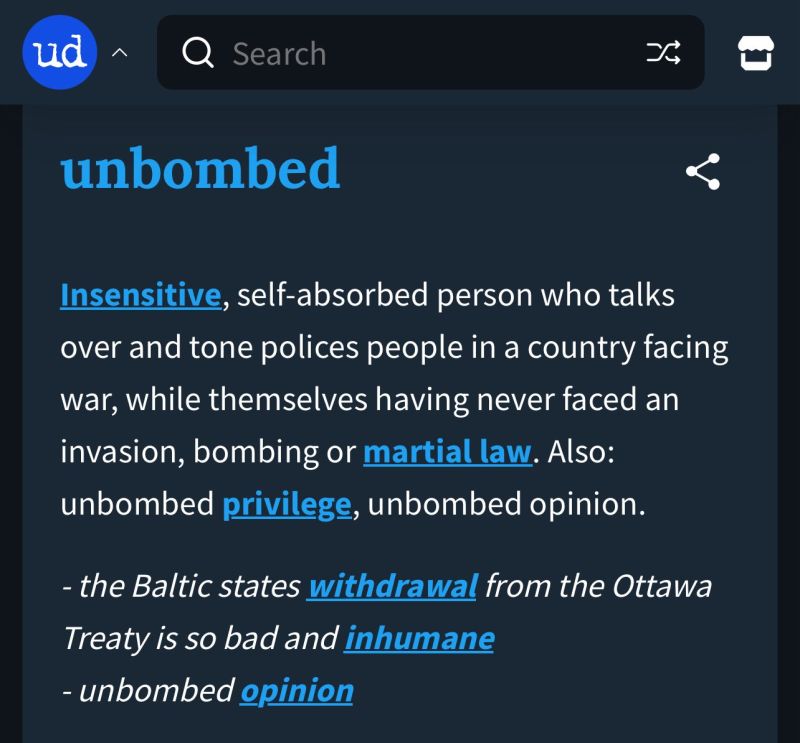
And, for the privileged Western Left, unbombed, not threatened with winter blackouts, whose loved ones and countrymen and women are not being murdered and tortured, this is acceptable. They can maintain their moral purity, detached from the reality of conflict in the 21st century, their physical and mental safety assured.
It is a position of abject, hypocritical, and craven self-interest. For the pacifist Western Left, their own moral purity is more important than the lives and well-being of millions of Ukrainians. It is a choice they happily make, and they shame those who refuse to follow their child-like positions as “not real leftists” or “reactionaries” or, deeply ironically, “red fascists”.
To be clear, Zarah is not the cause of this problem, she is just one of many leftist commentators who follow this trend. She, her party colleagues, and much if not most of the online Western Left, represent an ideologically paralysed movement that cannot see beyond its own myopic understanding of the workings of the world.
Doing pro-interventionist policy, leftistly
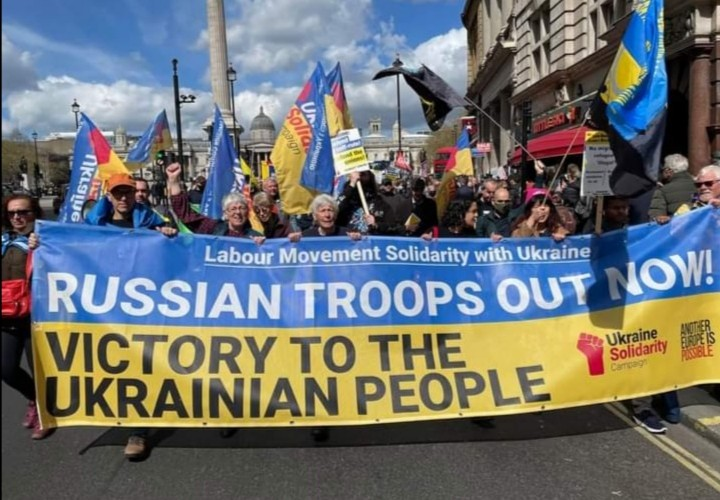
The outrage and criticism of Sultana’s interview was immediate and loud, especially on the right. Writers and commentators from the Independent, the Spectator, the Mail, podcasters of various persuasions, and other MPs spoke out strongly against her apparent readiness to abandon Ukraine to its fate. While this response was warranted, I do not mirror its shared underlying assertion, that leftism is itself antithetical to solidarity in the face of russian aggression, or inherently incapable of geopolitical savvy. I in fact reject it outright.
It was not a love for hard-power Western Hegemony that brought me to Ukraine. Nor was it personal or cultural affinity to Ukraine (much as that has bloomed since my coming here). Instead, it was my sense of internationalist solidarity, rooted in socialist beliefs, that brought me here.
To me, leftist politics is rooted in the support of all oppressed peoples, in all walks of life, against all forms of oppression. It is the support the working class against their economic exploiters. It is the support of the periphery of global capitalism against their exploiters in the capital core. It is the support of those on the knife edge of climate change against the billionaires and corporate powers that have supercharged climate collapse. It is the support of Palestinians against their genocidal colonisers. It is likewise the support of the Ukrainian people against the fascist state that seeks to exterminate their culture, language, identity, and even existence.
So, how do we, leftistly, support Ukraine? As always, the first step when it comes to determining what our policy on Ukraine should be, we should listen to Ukrainians.
While Ukraine, as a post-Soviet nation, does lack an organised political left (especially one that is not merely a front for russian imperialism), those voices in the Ukrainian left that are prominent are unequivocal in their support for continued Western aid and support. For Ukrainian leftists, resisting the genocide of their people is far more important than moral purity over whom the tools to do so come from. Likewise, a position often expressed by Ukrainian leftists to their Western counterparts is that russian occupation represents backsliding on a whole range of issues close to leftist causes. russian occupation would represent the destruction of women’s rights, the persecution of LGBTQ people, the end of what progress has been made in Ukraine as a liberal-democratic society.
As I see it, there are two spheres of resistance which the Western left must embrace. They are the Ukrainian People’s War and domestic support for Ukraine. In the first case, leftists in the West should stop admonishing Ukrainians for resistance and instead learn from them. See how a people can mobilise and organise organically to resist oppression, and support this movement materially. Yes, some leftists may balk at engaging with the martial form of Ukrainian resistance. As a former pacifist, I even understand this. However, as they correctly say regarding Palestine, inaction is siding with the oppressor. In this situation, moral and ideological consistency demands leftists to align with Ukrainian liberals and nationalists. This choice is better than making bedfellows with russian fascists.
In the domestic sphere, there are three ways in which Ukrainian leftists can shift their messaging and policy to pragmatically support Ukraine. The first, is stop demanding Ukrainian capitulation, or negotiation from a position of weakness. Calling for an immediate cessation of arms is the same as urging Ukraine to surrender to genocide. This is morally repugnant. It is also practically ridiculous. Criticism of the profit motive that drives corporate arms manufacturers need not be married with a call for capitulation. Second, they should stop engaging on Oppression Olympics and parroting russian propaganda about Ukraine. Stop weaponising the suffering of Palestinians at the hands of israel to downplay the suffering of Ukrainians. Stop using the real oppression faced by immigrants in Ukraine. Stop exploiting the challenges faced by sexual minorities. Doing so enables those who would visit upon them far worse fates. The third is longer term but no less important, and that is to begin promoting leftist policies that will support resistance without compromising on morality.
Zack Polansky of the UK Green party has managed all three of these, but on the third he is a stand out. While his party remains opposed to NATO, he acknowledges the need to seek alternative arrangements without pursuing a self-destructive immediate withdrawal. He criticises the profiteering of arms manufacturers while still supporting military aid for Ukraine. His positions are morally consistent, but grounded in reality and genuine solidarity.
Longer term, we must put forward a vision to end war profiteering. At the same time, we must ensure our ability to defend ourselves and our allies from the fascists and warmongers of the world. Will this mean a morally coherent NATO without the USA, Turkiye, or other countries prone to military interventionism? Will it involve state owned, non-profit weapons companies? These state-corporations could ensure our ability to defend ourselves while also depriving capitalists of a profit motive for war. I don’t know, I can’t prescribe all the solution. But these debates, how to protect ourselves from aggression rather than just bowing to it, are absolutely vital for the left to begin now.
It is not antithetical to leftist principles to embrace armed resistance. It is not antithetical to leftist principles to acknowledge that the world cannot be wished to peace. But we must re-imagine what solidarity means in an age of increasing conflict. Resistance cannot always be non-violent, especially when our enemies lust for war.
This is a reckoning that has been a long time coming, and we must engage now. Should we fail to do so, we risk being pushed out of the conversation of how we protect ourselves altogether. We cannot cede such a vital political arena wholly to the right. Not ever, and especially not now.

 Simmonds-Upton: Scribbler
Leave a comment